


Jump-starting a modern car with a flat battery by connecting jumper cables to another vehicle can be a practical solution, but it can also cause problems if it is not done correctly.
Below, at FQS Battery, we outline the most common problems that may arise:
When using jumper cables to start a battery by connecting it to another vehicle’s battery, it is essential to ensure that both cars have the same type of battery.
For example, if it is an AGM battery in a vehicle with a Start&Stop system, the other car must also be equipped with an AGM battery and a Start&Stop system.
This detail is crucial to avoid damage to the electronic components of both vehicles and to ensure a safe and efficient start.
1 – DAMAGE TO ELECTRONIC SYSTEMS
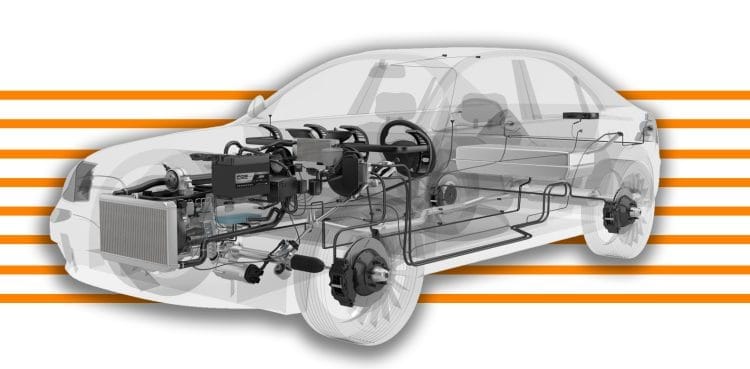
Modern cars have advanced electronic systems, such as ECUs, sensors, and control modules, which are sensitive to voltage fluctuations. Connecting the jumper cables incorrectly or doing it in a hurry can cause:
- Electrical surges that damage electronic components.
- ECU configuration faults, which could require reprogramming at a specialist workshop.
2 – BLOWN FUSES
An incorrect connection or a current spike can blow the car’s fuses. This could leave key systems inoperable, such as the ignition, lights, or electrical accessories.
3 – SHORT CIRCUITS
If the jumper cables are not connected correctly or the cables are worn, there is a risk of a short circuit that could damage both the car with the flat battery and the assisting vehicle.
4 – DAMAGE TO THE ASSISTING CAR’S BATTERY
Jump-starting a car with a flat battery can place an excessive load on the assisting vehicle’s battery. If that battery is not in good condition, it could also deteriorate or become depleted.
5 – ALTERNATOR FAILURE
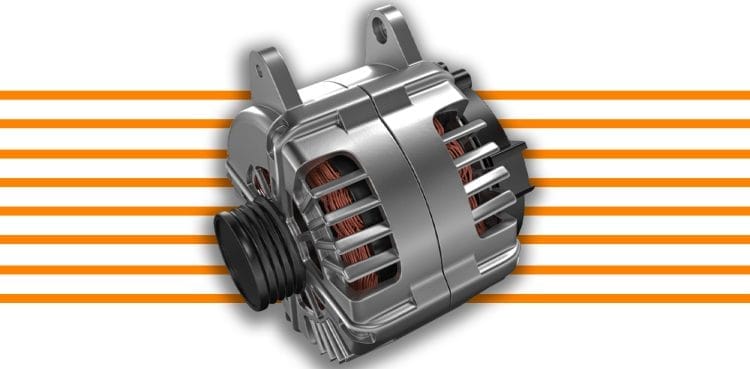
In some cases, the alternator in the car with the flat battery may be damaged if it tries to charge a battery that is completely depleted or in poor condition, especially if an overload occurs during jump-starting.
6 – ISSUES WITH SAFETY SYSTEMS
Some modern vehicles have advanced safety systems, such as alarms and electronic immobilisers, which may activate or become misconfigured when they receive a current spike during jump-starting.
7 – INTERNAL SYSTEMS BECOMING MISCONFIGURED
Modern cars store data in their ECUs that can be lost if the vehicle is left without power completely. This can cause:
- Infotainment system configuration faults.
- Issues with the injection system or sensor calibration.
At FQS Battery, our recommendation is to always consult professionals. Having experts not only ensures the job is done properly, but also helps prevent unnecessary issues and additional costs that could arise from attempting do-it-yourself solutions.
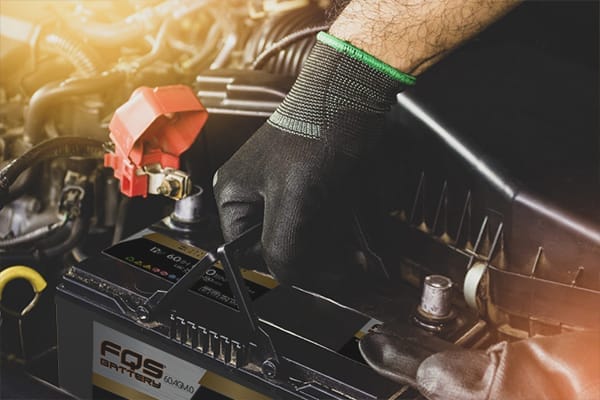
RECOMMENDATIONS TO AVOID PROBLEMS
- Use good-quality jumper cables:
Make sure the clamps and cables are in good condition and suitable for the type of vehicle. - Follow the correct order when connecting the jumper cables:
- First, connect the positive cable to the positive terminal of the flat battery.
- Then connect the other end to the positive terminal of the assisting battery.
- Connect the negative cable to the negative terminal of the assisting battery.
- Finally, connect the other end of the negative cable to an unpainted metal part of the flat car’s chassis.
- Switch off all electrical systems before starting:
This includes lights, air conditioning, the radio, and any accessory that may consume power. - Start the flat car carefully:
Do not keep the assisting car running longer than necessary to avoid overloads. - Consult the car manual:
Some modern vehicles have specific restrictions or recommendations for these situations.