

Today, most batteries on the market are maintenance-free, meaning they do not require water addition during their lifespan. These batteries use VRLA (Valve Regulated Lead Acid) technology, designed to recombine the gases generated during charging and convert them back into water, preventing electrolyte loss.
Main characteristics of maintenance-free batteries:
- Sealed: They do not require water addition, as they do not lose electrolyte.
- Valve-regulated: They have a safety valve that releases excess pressure if necessary.
- Safe and spill-proof: They can be installed in different positions without risk of leakage.
- Long lifespan: Their technology minimizes water evaporation, increasing their durability.

Although maintenance-free batteries dominate the market, maintenance batteries, which require periodic electrolyte level checks, are still sold.
It is important to note that all batteries, even maintenance-free batteries, can benefit from certain maintenance practices to extend their lifespan and ensure optimal performance.
1 – VISUAL INSPECTION
- Check that the terminals are clean and free of corrosion.
- Verify there are no electrolyte leaks, cracks, or swelling in the casing.

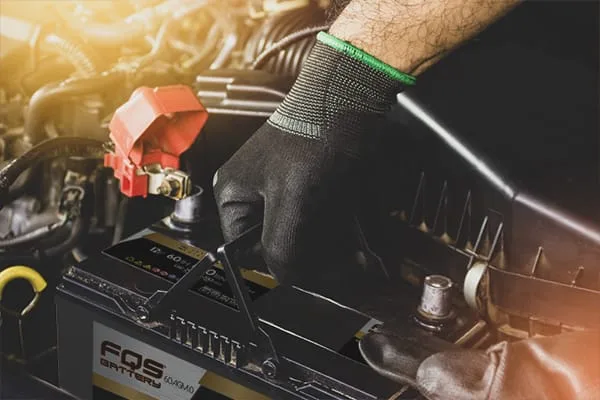
2 – TERMINAL INSPECTION
- If you detect sulfation (white or greenish deposits), clean them with a mixture of baking soda and water and a wire brush.
- Apply petroleum jelly or dielectric grease to prevent corrosion.
3 – ELECTROLYTE LEVEL CHECK (maintenance batteries only)
Maintenance lead-acid batteries require regular electrolyte level inspection to prevent damage and ensure their performance.
Required materials:
- Safety glasses and gloves.
- Screwdriver (if needed to remove caps).
- Distilled water (to refill if necessary).
Steps to follow:
- Safety first
- Make sure the car is off and parked on a stable surface.
- Wear gloves and safety glasses, as electrolyte is corrosive.
- Battery access
- Locate the battery in the engine compartment.
- If it has a protective cover, remove it.
- Electrolyte level check
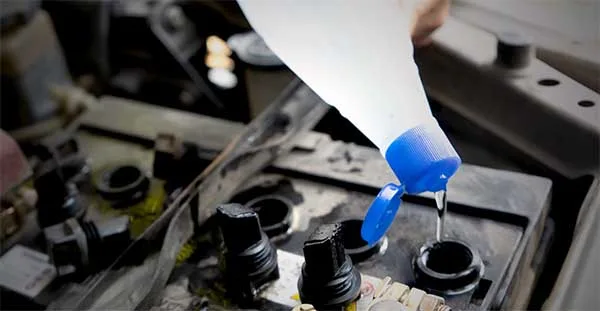
- If the battery requires maintenance, remove the caps from each cell with a screwdriver.
- Observe the electrolyte level in each cell:
- It should cover the internal plates, but not exceed the maximum mark.
- If the level is low and the plates are exposed, refilling is necessary.
- Refilling with distilled water
- Use only distilled water, never tap water, as minerals can damage the battery.
- Add distilled water until the appropriate level is reached, without overfilling.
- Closing and cleaning
- Replace the caps and ensure they are tightly closed.
- If there was any spill, clean it with a dry cloth.
- Reinstall the battery cover if it had one.
4 – CHARGE CHECK
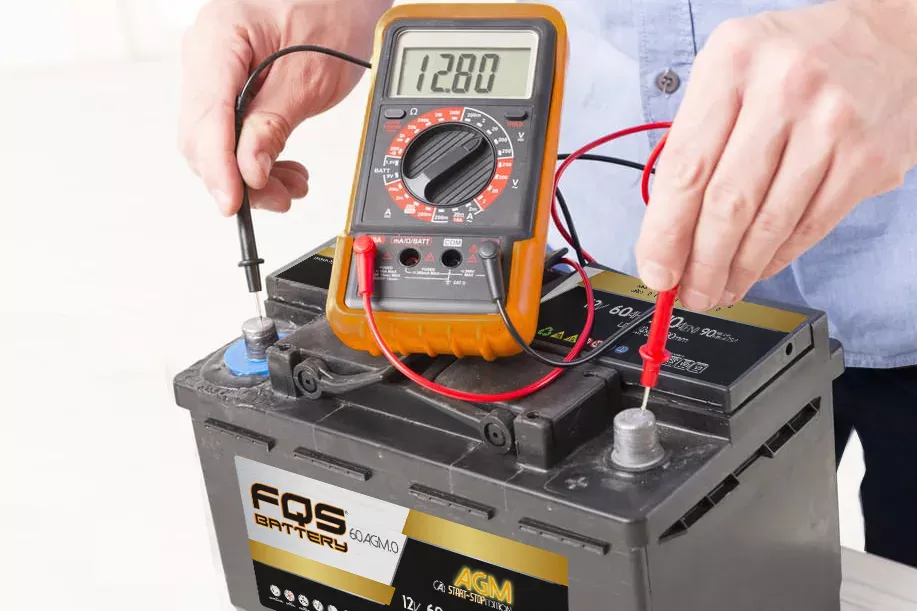
- Use a multimeter to measure the voltage with the engine off: it should be between 12.4V and 12.8V.
- If the voltage is low, recharge the battery with an appropriate charger before it fully discharges.
Recommended reading: THE CORRECT USE OF A MULTIMETER.
5 – CHARGING SYSTEM REVIEW
- With the engine running, measure the charging voltage. It should be between 13.8V and 14.7V.
- If the alternator does not charge correctly, the battery could be damaged prematurely.
6 – PROPER USE
- Avoid deep discharges, such as leaving the lights on with the engine off.
- If the vehicle will not be used for a prolonged period, disconnect the battery or use a charge maintainer.
CONCLUSION
Both maintenance and maintenance-free batteries can benefit from proper care to maximize their lifespan and performance. By following these recommendations, you will avoid unexpected failures and ensure reliable starting at all times.
When was the last time you checked your battery?
Find us on social media and leave your comment.
If you have any questions, please do not hesitate to contact us. At FQS Battery, we will be happy to assist you.