

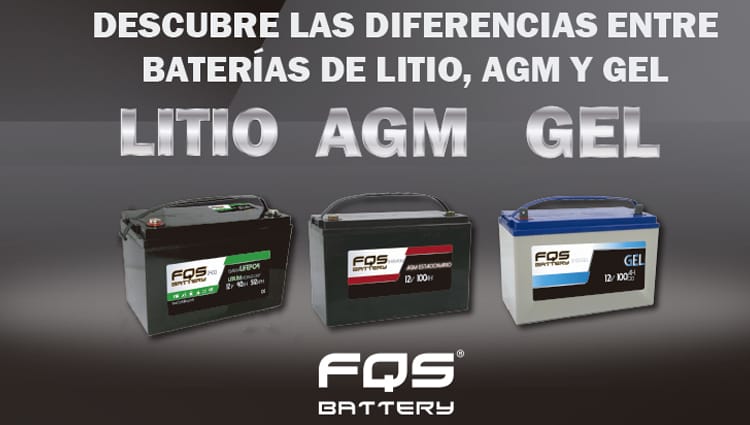
The key differences between Lithium, AGM, and Gel batteries lie in several aspects: their technology, lifespan, size, and performance in extreme temperatures, as well as depth of discharge. The choice of the right battery will depend on the specific needs of your application and your preferences regarding durability and performance.
So, how do you choose the right battery? First, by considering and understanding what their differences are.
Lithium, AGM, and Gel batteries are three different types of batteries used in various applications.
1 – Technology and Chemical Composition
Are you not familiar with these batteries? Don’t worry, this is a brief introduction that can help you learn a bit more about each of them:
- Lithium batteries: A lithium iron phosphate battery or LFP battery is a type of rechargeable battery, specifically a lithium-ion battery with a cathode of lithium iron phosphate: LiFePO.
LiFePO4 batteries have a somewhat lower energy density than the more common LiCoO2 (lithium cobalt oxide) batteries frequently found in electronic devices, but they offer greater durability (up to 10 years), higher power, and are inherently safer, which is why they are frequently used in robotics, electric vehicles, and energy storage. They are known for their high energy density and fast charging capability. They are lightweight and compact compared to lead-acid batteries. - AGM batteries are sealed lead-acid batteries that use an absorbent glass mat separator to keep the sulfuric acid immobilized rather than liquid. This makes AGM batteries maintenance-free and sealed.
- Gel batteries: They are also sealed lead-acid batteries, but instead of a liquid electrolyte, they use a thick silica gel electrolyte, and the separator material is the same as in AGM batteries, fiberglass. This makes them more resistant to heat and cold and to very deep discharges.
2 – Lifespan and Charge and Discharge Cycles
In this section, we will differentiate the life cycle of the batteries:
- Lithium batteries: They have a longer lifespan compared to lead-acid batteries. They can last between 5 and 15 years or more, depending on quality and use. Their DOD (Depth of Discharge) capacity of up to 100% is worth noting.
- AGM batteries: They have a moderate lifespan, meaning they can last between 3 and 5 years under normal usage conditions.
- Gel batteries: Designed for long-duration applications where the battery is charged and discharged frequently. Very good performance. Three times more compared to AGM batteries. They can last up to 5 years.
3 – Uses of Each Battery
- Lithium Batteries
- Electric vehicles
- Portable devices
- Renewable energy storage
- Drones
- Medical and emergency applications
- Consumer electronics
- 100% DoD
- AGM Batteries
- Solar energy systems, renewables.
- Electric rolling machinery
- Mobility scooters
- Medical storage
- For applications requiring regular and deep discharges. 75% DoD
- Gel Batteries
- Solar energy, renewables.
- Low-speed or small electric vehicles
- Alarm and security systems
- Electric wheelchairs
- Solar energy systems
- Other applications requiring a durable and reliable energy source. 85% DoD
4 – Weight and Size of Batteries
- Lithium batteries: They are lightweight and compact, making them ideal for applications where weight and space are critical, such as in electric vehicles and portable devices.
- AGM batteries: They are heavier and bulkier compared to lithium batteries, but lighter than gel batteries.
- Gel batteries: They are heavier and larger than AGM batteries due to the gel electrolyte they contain.
5 – Battery Performance in Extreme Temperatures
It is essential that you know the temperature range each of them accepts:
- Lithium Batteries: They perform better in a wider temperature range compared to lead-acid batteries, making them suitable for extreme climates.
- AGM batteries: They have good performance in cold climates, but they are not as versatile as lithium batteries in this regard.
- Gel batteries: They have good performance in extreme temperatures, with a long lifespan.
6 – Depth of Discharge (DOD)
- Lithium Batteries: Most lithium batteries have 100% DoD; that is, they are capable of utilizing all the energy stored in the battery.
- AGM batteries: AGM batteries have a depth of discharge of 75%
- Gel batteries: Gel batteries fall in the middle, with their DoD up to 85%, somewhat higher than AGM batteries.