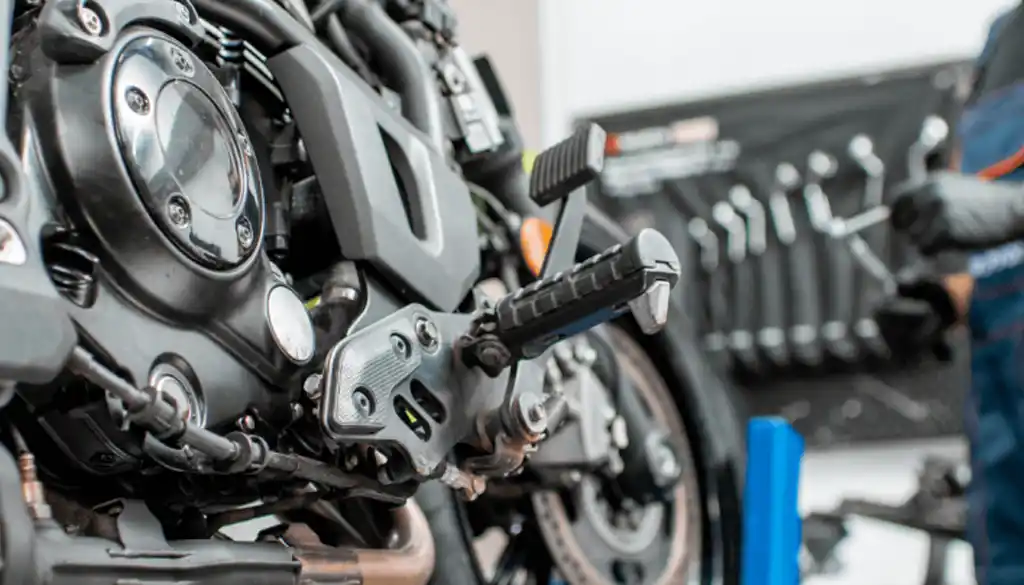


With changing temperatures and after periods of little use, it is very common for a motorcycle to “start strangely” and the problem ends up being the battery. In spring, this is very noticeable: the battery may have apparent voltage, but not enough real capacity to turn the starter with ease. At FQS BATTERY, we recommend a specific “seasonal start-up” check and remind you that a battery can show good voltage and still be weakened by sulfation or corrosion.
The good news: with a basic check, you can tell fairly well if it is in good condition.

WHAT YOU NEED
Minimum (recommended for everyone):
- A digital multimeter
- A small brush / old toothbrush
- Contact cleaner (optional)
- Gloves
If you want to be more precise (workshop level):
- Smart motorcycle charger/maintainer
- Battery tester (conductance or load)
BASIC VISUAL INSPECTION
Before measuring anything, look for the following:
- Clean and tight terminals (no white/greenish sulfate).
- Securely fastened cables (no fraying or loose terminals).
- Securely fixed battery (no movement).
- Casing without bulging, cracks, or leaks.
- Vent (if conventional battery) properly installed.
Many “bad batteries” are actually poor connections.
If the motorcycle fails to start and the electronics also act strangely, it is not always the battery: there could also be a wiring or contact problem.
RESTING MEASUREMENT
How to do it right
Measure with the motorcycle off and, if possible, after a few hours of non-use (or at least a while after turning it off). The “resting” measurement is the most useful reference for an initial assessment. At FQS BATTERY, we remind you that a fully charged 12V battery should be approximately 12.6–12.8 V at rest; and that for AGM, a “full charge” is usually near 12.8 V.
Guideline values (12V lead-acid / AGM)
- 12.6–12.8 V → Well charged (AGM is usually at the high end).
- 12.4–12.5 V → Acceptable, but it is advisable to charge and check again.
- 12.3 V or less → Low charge / possible problem.
- Well below 12 V → Bad sign (deep discharge or damaged battery).
Note: having voltage does not guarantee health. It can show a good reading and still lack cranking capacity. We remind you of this from FQS BATTERY.
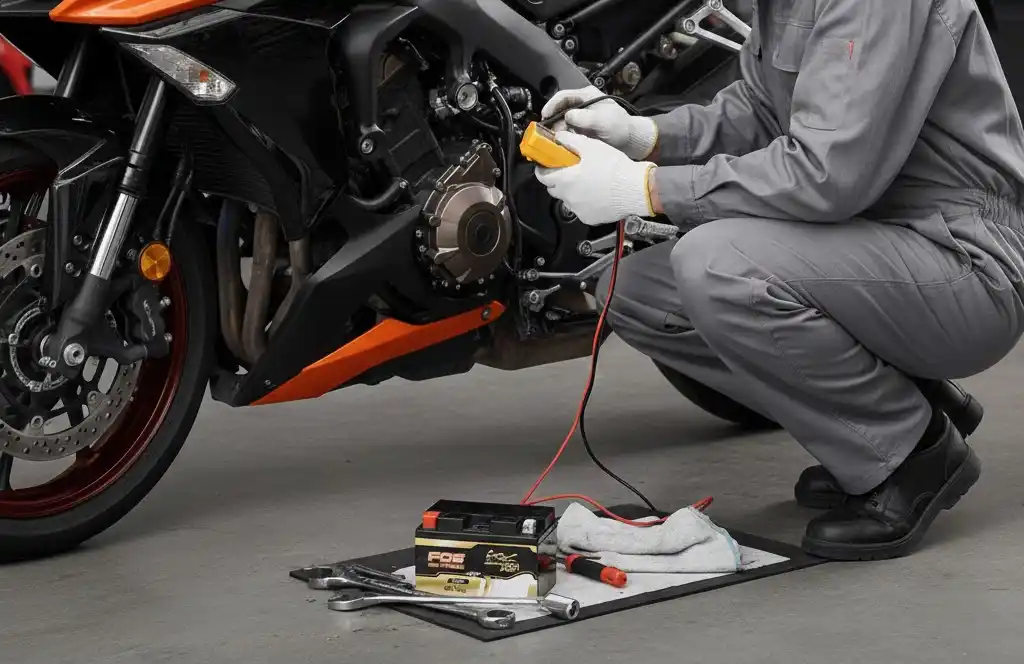
TEST DURING START-UP (VERY REVEALING)
This test tells you if the battery withstands the effort.
How to do it
- Set the multimeter to DC volts.
- Leave it connected to the terminals.
- Press the starter and observe the voltage drop (if your multimeter has a MIN/MAX function, even better).
What to look for
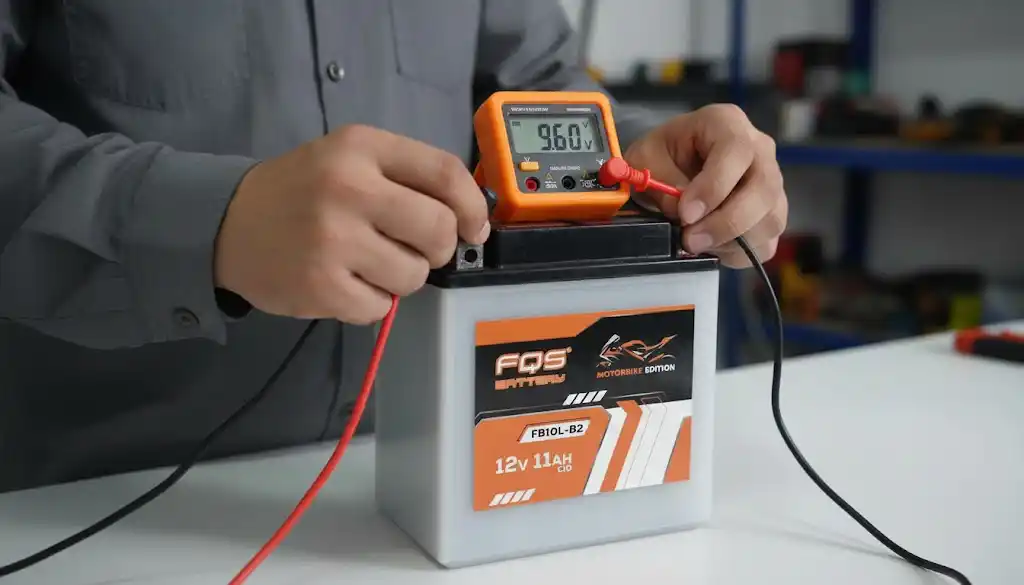
As a general load test reference, the classic criterion is that it should not drop below 9.6 V under load (depending on conditions and manufacturer specifications). For FQS BATTERY, this is a threshold in standard load tests as a reference during motorcycle start-up.
- Stays above ~9.6 V → Good (guideline).
- Drops below ~9.6 V → Weak battery, discharged, or low capacity.
If the starter motor turns slowly, even if the resting voltage seems “decent,” suspect capacity and not just charge.
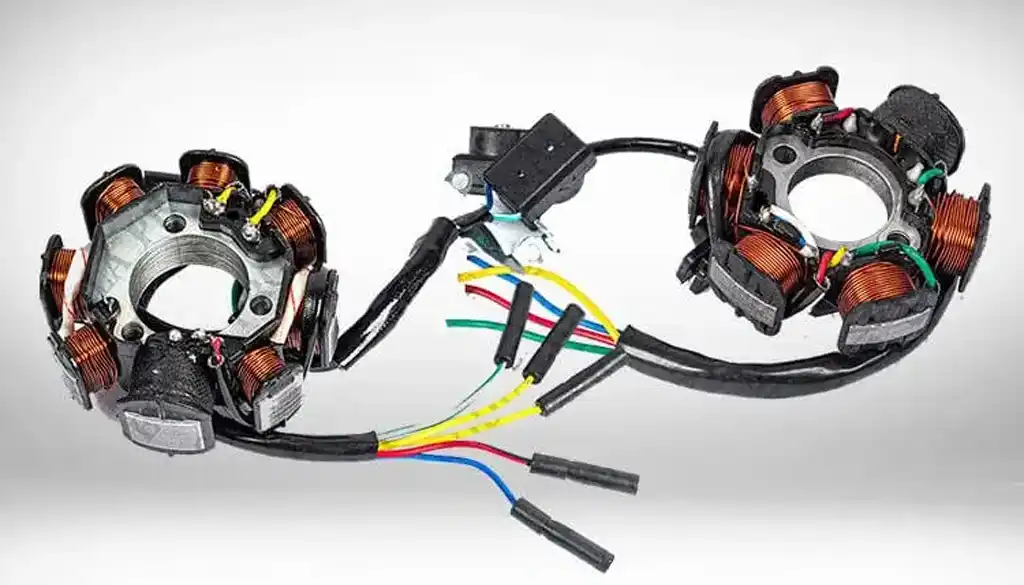
CHECKING THE CHARGING SYSTEM
Not everything is the battery’s fault. Sometimes you change it… and it fails again because the motorcycle is not charging correctly.
How to check it
- Start the motorcycle.
- Measure the voltage at the terminals with the engine running.
- Repeat while revving slightly (do not overdo it).
If the battery and charging are fine, the voltage should stabilize at slightly over 14 V shortly after starting.
Practical interpretation
- Rises and stabilizes around 14 V → Normal (good sign).
- Stays clearly low → There may be a charging problem.
- Spikes too high → Possible regulator issue (risk of overcharging).
THE MOTORCYCLE HAS BEEN IDLE FOR A WHILE
If the motorcycle has been idle for some time, do not assume the battery is dead at the first sign.
Useful recommendations
- Charge with a smart maintainer/charger specific for motorcycles/powersports (which you can also use for seasonal maintenance).
- Avoid fast or high-intensity chargers if you are not sure what you are doing: there may be a risk of permanent damage.
- Charge in a ventilated area away from sparks/flames (hydrogen during charging is a real risk).
- Use the correct program according to the battery type (conventional, AGM, gel): at FQS BATTERY, we remind you that each technology requires different charging specifications.
Important with AGM
If it is AGM (sealed):
- Do not open it
- Electrolyte does not need to be checked
- Clean and charge it, but using the appropriate mode
BATTERY SIGNALS
Changing it in time prevents you from being stranded on the very day you head out again.
Typical symptoms
- Slower start than normal
- Discharges quickly after a few days of non-use
- Needs frequent recharging
- “Correct” resting voltage but drops significantly when starting
- Strange behavior of the dashboard/electronics when turning the ignition or starting
5 – WHEN TO CONSIDER THAT THE BATTERY MAY BE THE PROBLEM
More and more motorcycles use lithium. Here, the advice from FQS BATTERY is simple:
- Do not assume the same values/procedures as lead-acid/AGM
- Use a compatible charger
- Follow the data in our technical sheet
With lithium, a voltage measurement alone can be more misleading than with lead-acid/AGM if not interpreted correctly.

MAIN POINTS OF THE EXPRESS CHECK
- Clean and tight terminals
- Battery securely fixed
- No cracks/leaks/bulging
- Correct resting voltage (12.6–12.8 V guideline for 12V lead-acid/AGM)
- No excessive voltage drop during start-up (reference ~9.6 V)
- With the engine running, charging around 14 V
CONCLUSION
To know if your motorcycle battery is in good condition, it is not enough to just “see if it starts.” A proper check combines:
- Visual inspection
- Resting voltage
- Voltage drop during start-up
- Charging system check
With these four tests, in most cases you will know if the problem is:
- a discharged battery,
- an aged battery,
- or a motorcycle charging problem.