
At FQS Battery, we receive technical inquiries from customers and workshops regarding battery maintenance. A frequent question is whether a starter battery can be cleaned with pressure water.
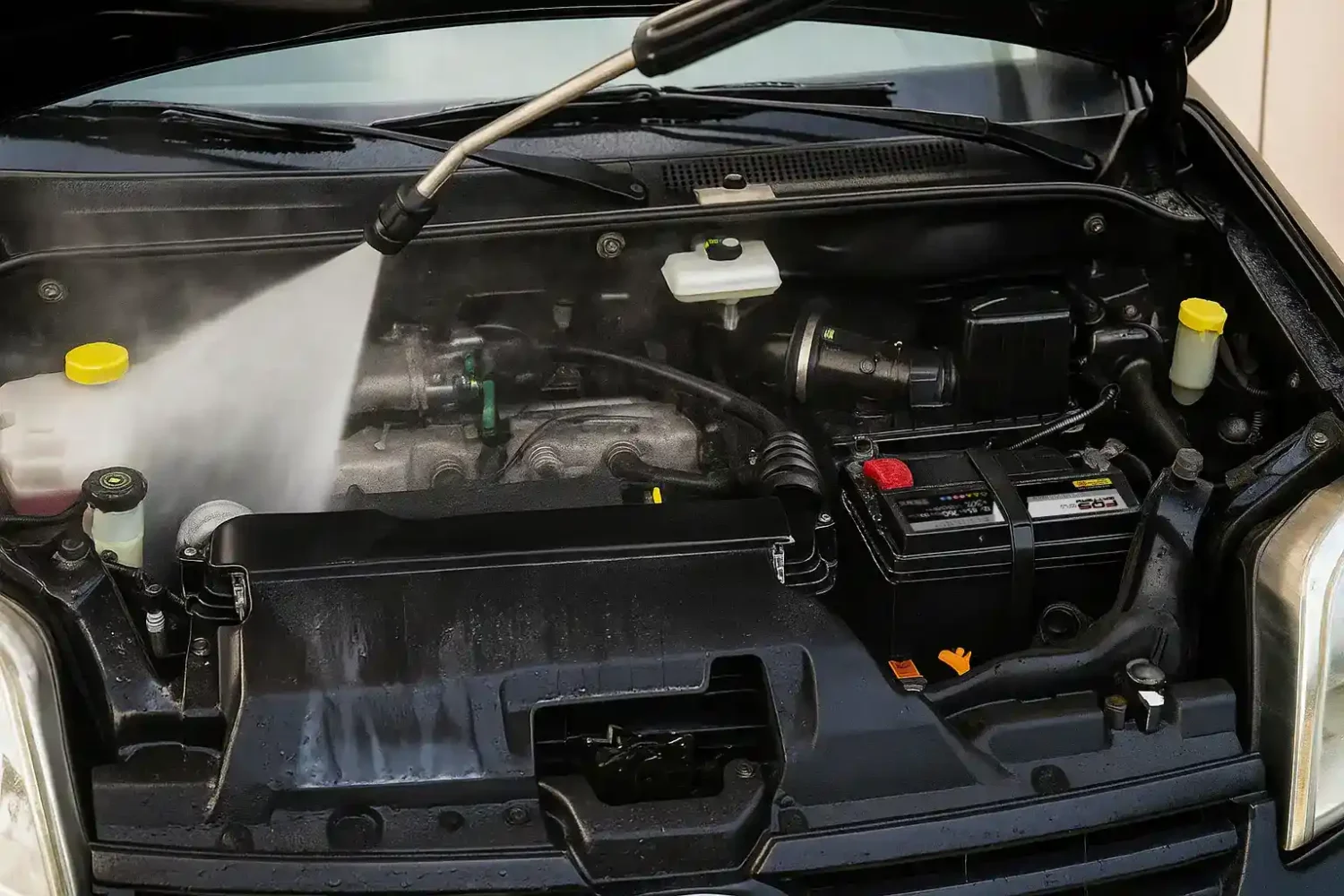
The answer is clear: it is not advisable to apply pressure water under the hood, unless done by a specialist with full knowledge of electrical and electronic components.
Risks of using pressure water on the battery and engine
Although it may seem like a good idea to keep the engine compartment clean, using pressure water can cause serious damage:
- Short circuits due to water entering electrical connectors.
- Failures in critical sensors (MAF, TPS, IAC, among others), which alter engine performance.
- Accelerated oxidation and sulfation on terminals, connectors, and electrical components.
- Ignition problems or power loss, accompanied by OBD scanner error codes.
In some cases, incorrect cleaning can lead to breakdowns requiring the replacement of costly parts or even affecting the vehicle’s ECU.
Parts most sensitive to pressure water
Under the hood, there are components that should not be directly exposed to high-pressure jets:
- Alternator – can short circuit or lose efficiency.
- Ignition coils: moisture causes spark failures and engine jerks.
- ECU module (engine control unit): extremely sensitive to water; a failure can immobilize the car.
- Fuse and relay boxes: moisture can cause oxidation or poor contacts.
- Visible sensors (temperature, pressure, position, etc.): a single drop on the connector can affect its reading.
Prepared for extreme climates
At FQS Battery, we recommend safe cleaning and prevention methods:
- Manual cleaning: use a dry or slightly damp cloth to remove dust.
- Corrosion removal on terminals: apply a controlled mixture of baking soda and water with a soft-bristled brush. Never soak the area.
- Immediate drying: after cleaning, ensure that the battery terminals and cover are completely dry.
- Preventive protection: apply dielectric grease or technical petroleum jelly to the terminals to prevent sulfation.
- Regular inspections: check the fastening, cleanliness, and condition of the terminals periodically.
Engine degreasing
A common practice in workshops is what is traditionally known as “engine degreasing”. The term comes from an old procedure that involved draining the oil, filling the crankcase with a mixture of petroleum and oil, running the engine for a few minutes, and then draining it. This aimed to remove accumulated carbon deposits, sludge, and varnish from the interior.
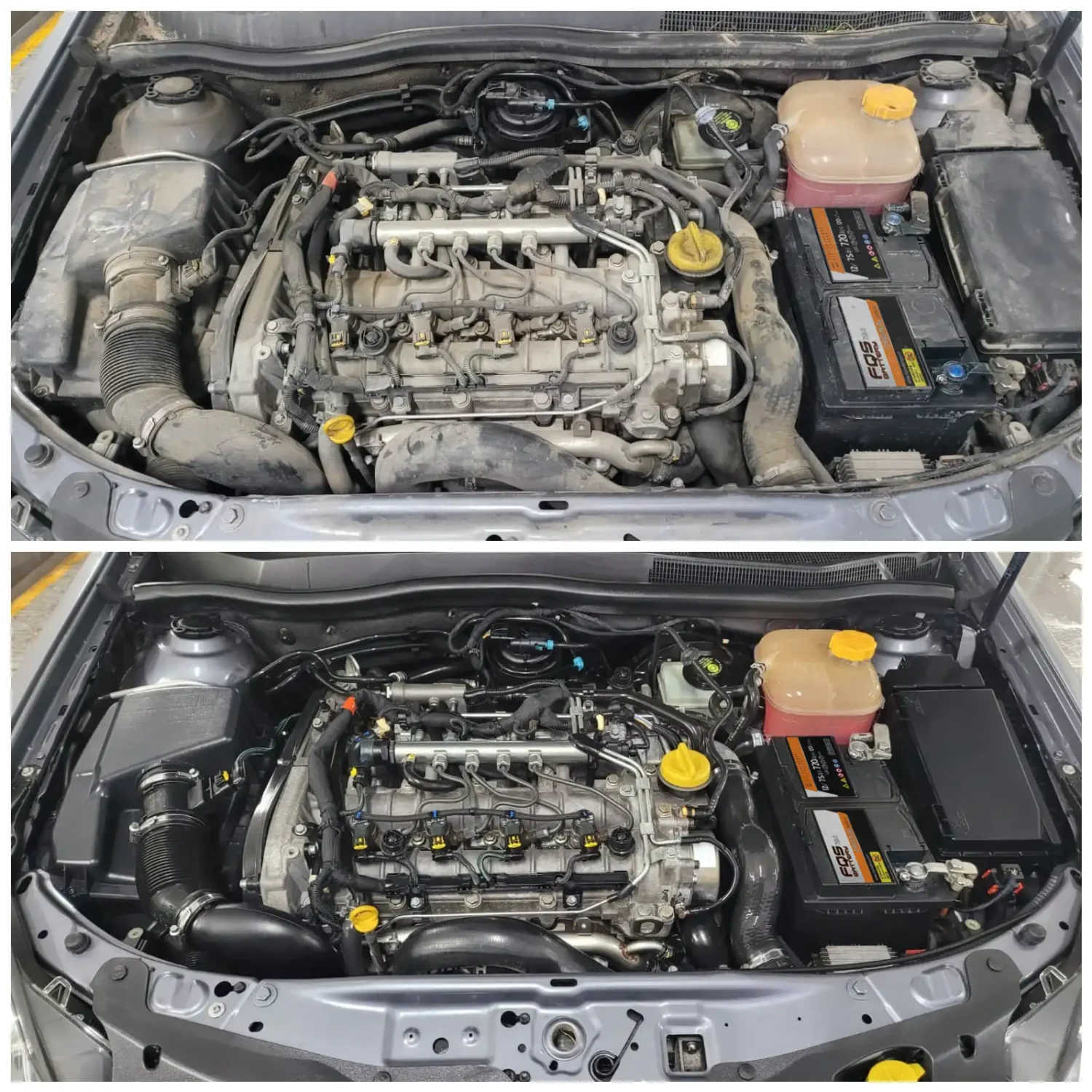
Currently, the concept refers to a comprehensive cleaning of the engine and all components located under the hood, with the aim of facilitating the detection of possible leaks of lubricating oil, fuel, or coolant. This work must be carried out by specialized professionals, who use specific techniques, tools, and products to guarantee a safe and effective result.
Conclusion
Keeping the battery free of corrosion is important, but pressure water under the hood poses a high risk to the vehicle’s electronics. A cleaning error can lead to costly repairs.
Therefore, if it is necessary to clean the engine compartment, we always recommend going to a specialized workshop that has the appropriate knowledge and tools.
At FQS Battery, we are committed to offering technical advice and professional solutions to extend battery life and ensure the reliability of our customers’ vehicles.