
AGM and EFB Batteries: What to Know Before Buying and Differences from Conventional Batteries
One of the most common questions among our customers is about the differences between AGM and EFB batteries. At FQS Battery, we strive to keep you informed to offer you the best service and help you choose the right battery for your vehicle.
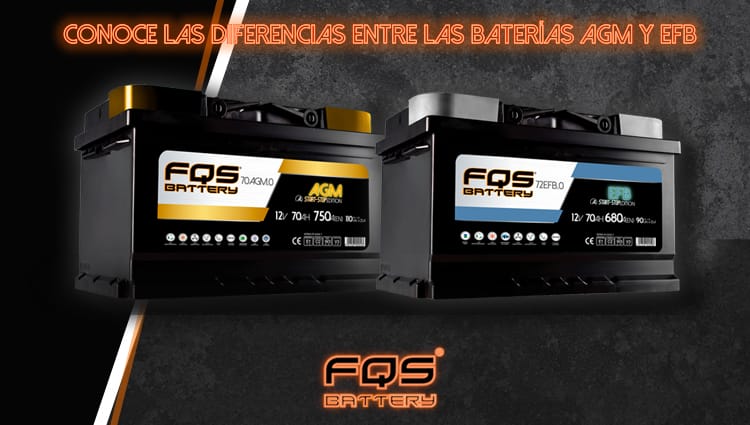
AGM and EFB batteries are two types of batteries that have gained popularity in recent years.
Their acronyms refer to Absorbent Glass Mat (AGM) batteries and Enhanced Flooded Battery (EFB).
Both offer specific advantages compared to conventional lead-acid batteries, but it is important to understand their differences before making an optimal decision. Let’s review all the information carefully:
Main Characteristics of AGM Batteries
AGM batteries are an evolution of conventional lead-acid batteries. They use advanced technology that involves absorbing the electrolyte in a glass fiber, which allows for a more compact design and greater efficiency. Some of their key characteristics are:
Cold Cranking
AGM batteries have excellent cold cranking capacity, which makes them ideal for cold climates.
Deep Discharge
They can withstand deeper discharges without suffering damage, which makes them suitable for high energy consumption applications.
Absorbed Electrolyte
Conventional automotive batteries use sulfuric acid as an electrolyte, and this acid can be corrosive and dangerous in case of spillage or battery breakage.
In absorbed electrolyte batteries, in case of breakage there is generally no significant spillage of corrosive substances. This makes these batteries safer and more environmentally friendly compared to conventional lead-acid batteries.
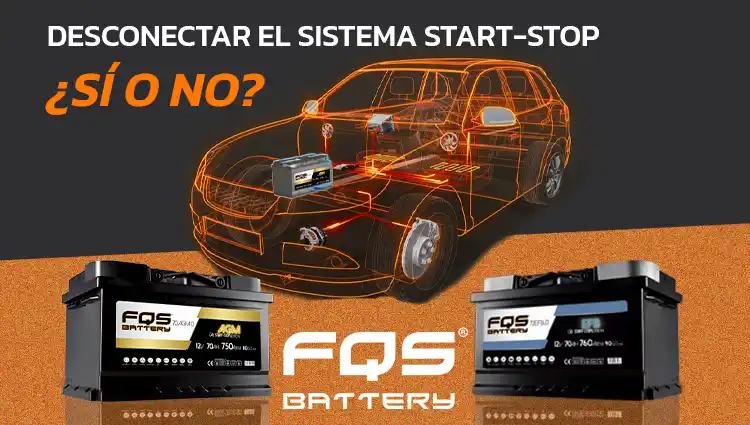
Use in Start-Stop Systems
These batteries are designed to withstand rapid charging and discharging, which makes them ideal for start-stop systems with regenerative braking.
Regenerative braking is an innovative technology that allows vehicles to recover and store part of the energy that is normally lost during braking. This energy is converted and stored in the vehicle’s battery for later use. This is essential for achieving fuel savings, which in turn contributes to the reduction of carbon dioxide (CO2) emissions.
Main Characteristics of EFB Batteries
These are some of the key characteristics of EFB batteries:
Better Performance
EFB batteries are the evolution of conventional batteries. These are batteries that can be used in vehicles seeking better performance. At FQS we always inform that the batteries recommended by the manufacturer should be installed.
Service Life
EFB batteries have a quite good service life and can meet the needs of most drivers. And, although it is true that AGM batteries offer a longer service life, there are other factors to consider, such as operating temperature and location, and everything depends on what your current needs are.
Withstand Long Inactivity
Unlike conventional batteries, EFB batteries are designed with more resistant plates and a special separator system that retains the active material, which allows them to maintain their performance even after long pauses.
Their ability to withstand long periods of inactivity without significantly losing their charge or capacity is one of the main advantages of EFB batteries.
This is especially useful in vehicles that are not used regularly or that remain parked for long periods.
Improved Thermal Stability
This stability is essential in areas with hot climates, where temperatures can reach extreme levels. A component with good thermal stability not only guarantees optimal performance under these conditions, but also extends its service life and reduces the risk of premature failures.
What Are the Main Differences Between AGM and EFB Batteries and Conventional Batteries?
Both AGM and EFB batteries offer significant advantages compared to traditional lead-acid batteries:
- Greater durability: They have a longer service life due to their ability to withstand repeated charge and discharge cycles.
- Greater resistance to deep discharge: They are less susceptible to damage if completely discharged.
- Less maintenance: They do not require refilling with distilled water and are less prone to leaks. (AGM)
- Better performance in extreme climates: They perform well in both cold (AGM) and hot (EFB) climates due to their sealed design and cold cranking capacity.
So? Which One to Choose?
The choice between an AGM battery and an EFB battery will depend on your vehicle’s needs.
If you have a vehicle with advanced Start-Stop technology, with regenerative braking, only the AGM battery could be the best option.
However, in hot areas, an EFB battery will offer better performance than an AGM.
In any case, it is always important to see what the manufacturer dictates and what your vehicle’s specifications are. Speaking with a professional before making a final decision can be a good option.
A suitable battery will guarantee optimal performance and a long service life for your vehicle.
If you have any questions, we recommend asking our team of professionals, who will be happy to help you.