
Frequently, a common scenario recurs in workshops: the customer arrives convinced that their battery is not the problem because it has been recently checked or replaced.
However, the vehicle won’t start. The explanation is that the starting and ignition circuit is a multifactorial system, where the battery is only the first link.
At FQS BATTERY, we tell you what can happen and which systems should be checked.
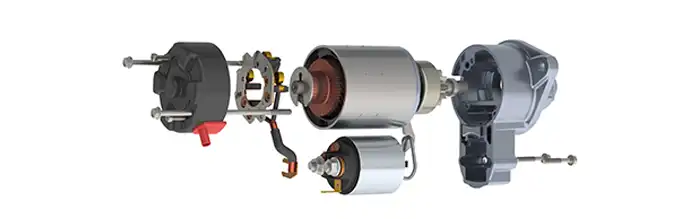
1 – Starter Motor and Solenoid
The starter may exhibit:
- Wear in the commutator or brushes → voltage drop and low cranking torque.
- Defective solenoid → the pinion does not engage with the flywheel ring gear.
- Seized bearings → excessive amperage consumption that the battery cannot sustain even if charged.
Recommended test: measurement of voltage drops in positive and negative during the cranking maneuver.
2 – Relays and Fuses in the Starting Circuit
A starter relay with burned or stuck contacts prevents current flow. Similarly, a tripped main fuse (usually 30–60 A in the starting line) blocks the system.
3 – Ignition Switch and Start-Stop Systems
The ignition barrel or electrical switch fails due to mechanical wear or loss of internal continuity. In vehicles with a Start/Stop button, the Body Control Module (BCM) may not send the activation signal to the starter relay.

4 – Immobilizer and Coded Keys
The anti-theft system is critical: the absence of transponder key recognition blocks injection and ignition. The starter motor may turn, but the ECU (Engine Control Unit) does not enable spark or injection.
5 – Fuel Supply System
- Inoperative electric pump (winding, relay, or fuse failure).
- Clogged fuel filter.
- Defective pressure regulator.
Diagnostic test: measurement of injection rail pressure.
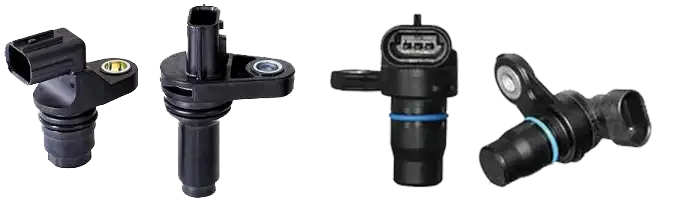
6 – Synchronization Sensors (CKP/CMP)
The crankshaft position sensor (CKP) or camshaft position sensor (CMP) are essential. A non-existent or inconsistent signal prevents synchronization. The engine turns, but there is no injection or spark.
7 – Alternator and False Impressions of a Charged Battery
A battery may show 12.5 V at rest and yet not withstand the 200–400 A demand of starting. This occurs when the alternator has not been charging for a long time, and the battery only retains a superficial voltage (surface charge). A load test is essential.
8 – Connections, Grounds, and Sulfation
- Parasitic resistances in ground cables.
- Terminals with sulfate or insufficient tightening.
- Main cables with corroded internal wires.
These defects increase internal resistance and reduce the available current during starting.
Conclusion
A starting failure with a good battery requires checking the entire system:
- Starter motor
- Control circuit (relays, fuses, switch)
- Immobilizer
- Injection
- Synchronization sensors and ground quality.
Proper diagnosis requires measuring voltage drops, starting currents, and reference signals with an oscilloscope.
Ultimately, the battery is not always to blame: the real challenge lies in identifying which link in the chain interrupts the starting sequence.